
Product category · Technique / method route

3D Centrifugal Cryogenic Grinders

This route combines centrifugal motion with a low-temperature working condition. Choose it when the method needs both, not when one of the two is simply a preference. Confirm cooling route, motion and vessel compatibility against product model records.

Also described as: centrifugal tissue grinder · centrifugal grinding · 3D centrifugal cryogenic grinding.

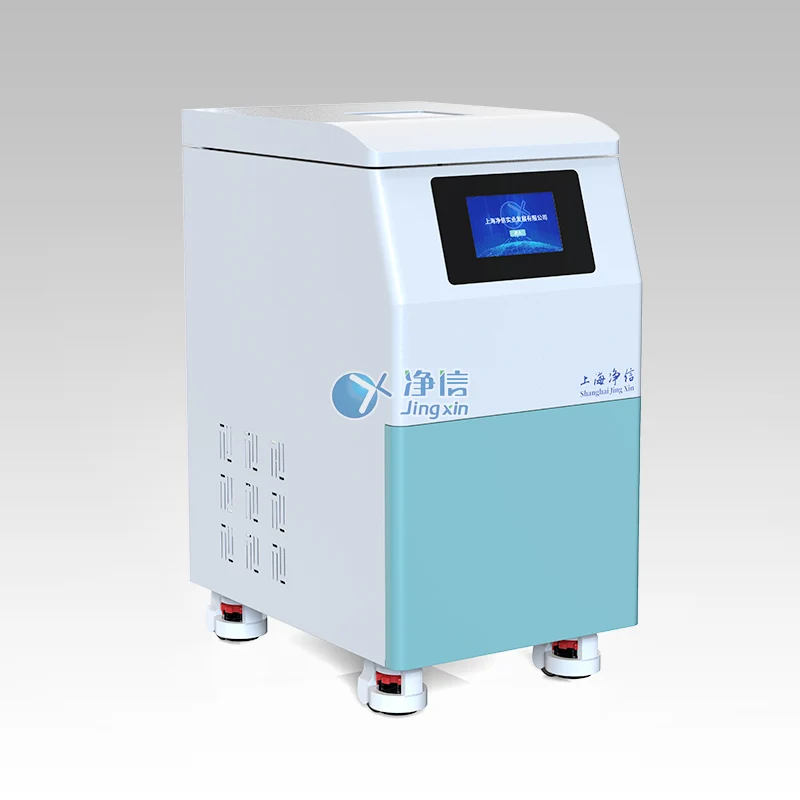
JXCL-5K product
Representative model: JXCL-5K
PRODUCT FAMILYCentrifugal + cryogenic routeCompare model specifications below.
Family3D centrifugal cryogenic
WorkloadBatch or single-vessel by configuration
TemperatureCryogenic by product model
Main decisionMotion + cooling route + container
Product models

Compare centrifugal cryogenic grinders

Only products with a traceable official parameter table are shown.

ModelWorkloadTemperatureCentrifugationKey model-specific value
JXCL-5K3D Centrifugal Cryogenic Grinder24 × 2 mL; 24 × 5 mL; 18 × 10 mL; 15 × 15 mL; 12 × 50 mL−50 °C to room temperatureUp to 6000 rpmHomogenization speed: 15 m/sView model →
Choose this route when

Centrifugal cryogenic sample fit

Centrifugal motion changes how the load behaves inside the vessel; cryogenic conditions change how the material fractures. Combining them is a specific method choice, and it carries additional handling, condensation and cooling requirements.

  • Centrifugal motion is required by the established method.
  • Heat-sensitive or brittle material needs low temperature.
  • Static electricity and powder loss matter for the sample.
  • Cooling and motion must be recorded together.
Choose another route when

When to choose another route

If low temperature is the only constraint, use the cryogenic, vacuum cryogenic or liquid-nitrogen route. If uniform batch throughput is the only constraint, use a throughput family.

Compare cryogenic routes →
Selection logic

Cryogenic selection checks

This route fails commercially when one of the three is assumed rather than confirmed.

Selection matrixUse model-specific values only
MotionDocumented centrifugal or 3D motion behaviour for the exact model.
Cooling routeDocumented cryogenic method, pre-cooling requirement and temperature control.
ContainerCryogenic-rated container and adapter compatibility — never assumed from size alone.
ContainmentCondensation, frost, static electricity and powder-loss controls.
Sample fitApproved application and evidence records for the material.
BudgetUnit + cooling components + cryogenic containers + consumables + setup.
Route comparison

Motion & cooling requirements

Deciding these two questions independently prevents a configuration that solves one constraint and ignores the other.

Method routesDecide by method, then by model
3D centrifugal cryogenicCentrifugal motion combined with a documented cryogenic working condition.
Cryogenic (non-centrifugal)Low-temperature route where the motion requirement is standard.
Vacuum cryogenicSealed low-temperature processing with vacuum-specific setup and maintenance.
Liquid nitrogenDeep cryogenic embrittlement for hard, elastic or room-temperature-resistant materials.
BEFORE
AFTER
Sample result componentPublish only with sample, motion, cooling condition, container and evidence level.
Performance evidence

Cryogenic preparation evidence

A cryogenic claim needs the cooling condition that produced it: pre-cooling method, working condition and how long the sample stayed cold. Publish the result only with those fields attached.

L1Technical specification
L2Internal performance test
L3Application test
L4/5Customer / published evidence
View evidence & case studies →
Price & lead time

Cryogenic configuration costs

Cooling hardware, cryogenic-rated containers and safety provisions usually dominate the difference between a standard and a cryogenic quotation. Make the layers explicit.

Understand total cost →
01Main unitMotion and cooling configuration
02Cryogenic componentsPre-cooling, transfer and containment items
03Cryogenic containersExplicitly approved for the service
04Delivery, setup & safetyInstallation, ventilation and training where applicable
Working with very cold samples?

Confirm your cryogenic setup

Sample testing should record the container, pre-cooling route and working condition together with the result.

ONLINE ENQUIRY

Let’s discuss your requirements.

Tell us about your samples and the configuration you need.