
Product category · Technique / method route

3D Sample Tissue Grinders

A 3D sample grinder uses three-dimensional motion rather than a single shaking or rotational axis. It is a technique route for mixing and homogenization where motion geometry, not only speed, influences the result. Verify motion, vessel and sample fit before comparing models.

Also described as: 3D sample grinding · three-dimensional motion grinder · composite sample mixing and homogenization.

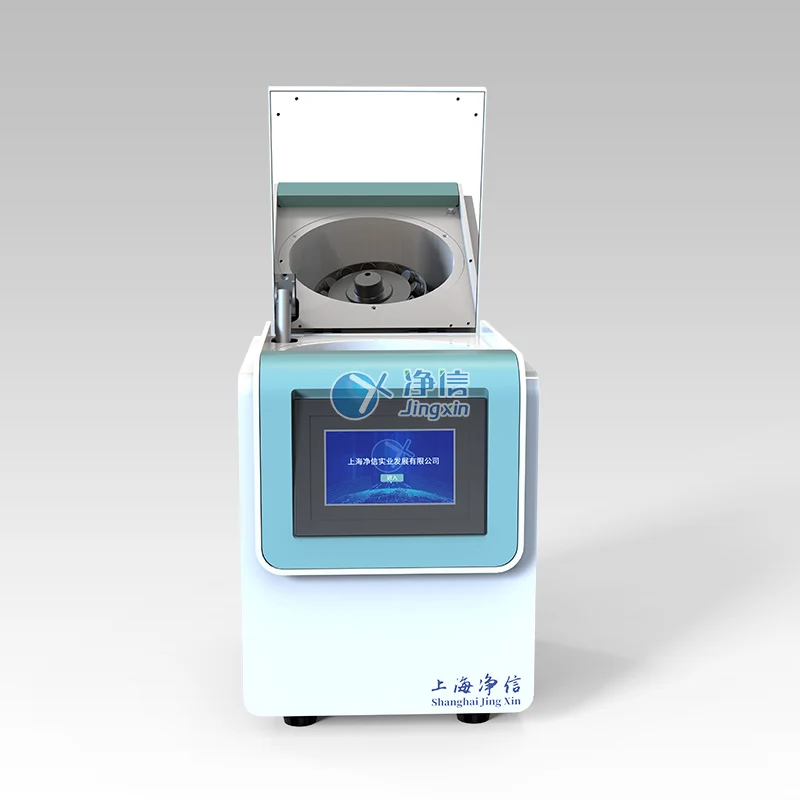
JXFSTPRP-4D product
Representative model: JXFSTPRP-4D
PRODUCT FAMILYThree-dimensional motion routeCompare model specifications below.
Family3D motion grinding
WorkloadMixing and homogenization oriented
MotionThree-dimensional by configuration
Main decisionMotion + vessel + sample behaviour
Product models

Compare 3D tissue grinders

Motion claims and technical values are published only when the product information supports them.

ModelWorkloadMotionTemperatureKey model-specific value
JXFSTPRP-4D3D Sample Tissue Grinder24 × 2 mL or 12 × 5 mLThree-dimensionalNo active cooling range statedOscillation speed: 1–21 m/sView model →
Choose this route when

3D grinding sample fit

Three-dimensional motion is requested when a single-axis motion does not mix or homogenize the material evenly. Composite, fibrous or unevenly loaded samples are the typical reason this route is evaluated.

  • Mixing and homogenization in the same step.
  • Composite or non-uniform sample structure.
  • Vessels or loads where single-axis motion is uneven.
  • Method already defined in terms of motion geometry.
Choose another route when

When to choose another route

If the bottleneck is batch size, choose a throughput family. If heat sensitivity or sample brittleness drives the method, choose a cryogenic, vacuum or liquid-nitrogen route first.

View all tissue grinder routes →
Selection logic

3D grinder selection checks

Motion claims are easy to make and hard to compare. Keep them tied to product model records.

Selection matrixUse model-specific values only
MotionDocumented motion type, axes and amplitude — never inferred from the category name.
Sample fitApproved sample application and evidence records for the exact material.
VesselTube, jar or plate compatibility and mandatory adapter.
LoadFill volume, balance requirements and vessel limits.
TemperatureRoom or controlled temperature by configuration.
BudgetUnit + mandatory adapters + consumables + delivery and setup.
Route comparison

3D grinding motion

Compare the motion requirement against the other method routes before requesting a configuration.

Method routesDecide by method, then by model
3D motionThree-dimensional agitation for mixing and homogenization where single-axis motion is uneven.
Single-axis bead millingStandard batch disruption in sealed tubes or plates with grinding beads.
CentrifugalMotion driven through a rotational or centrifugal path, optionally combined with a low-temperature route.
Handheld / probeDirect-contact, single-sample route where one sample is prepared at a time.
BEFORE
AFTER
Sample result componentPublish only with sample, motion setting, vessel, load and evidence level.
Performance evidence

Grinding & homogenization evidence

A visually mixed sample is not evidence of homogenization or of downstream suitability. Bind the result to the motion setting, vessel, load and the metric that was actually measured.

L1Technical specification
L2Internal performance test
L3Application test
L4/5Customer / published evidence
View evidence & case studies →
Price & lead time

Configuration & quotation

Motion configuration, vessel set and adapters usually move the total more than the headline unit. Make each layer visible.

Understand total cost →
01Main unitMotion configuration
02Vessels & adaptersMandatory compatibility items
03ConsumablesTubes, jars and media
04Delivery & setupShipping and commissioning where applicable
Motion still uncertain?

Validate 3D sample grinding

Compare the 3D route against a standard batch route with the same sample and the same downstream goal.

ONLINE ENQUIRY

Let’s discuss your requirements.

Tell us about your samples and the configuration you need.